Digital Sovereignty: Skills and Infrastructure
We were at VivaTech for the 2026 event, and Christophe Wagnière, CEO of 42 Switzerland, through discussions with participants, shows us how sovereignty is the theme of this year’s event.
We were at VivaTech for the 2026 event, and Christophe Wagnière, CEO of 42 Switzerland, through discussions with participants, showed us how sovereignty is the theme of this year’s event: “The issue of sovereignty is truly at the heart of all discussions [...] in every country represented here; it really is about defending the local ecosystem. There are two countries not here: the US and China [...] which does highlight their dominant influence over the global digital ecosystem. ’ The two global tech giants were everywhere, but only through their companies, never as countries. A strong signal about the state of the current digital balance of power.
Is digital sovereignty merely a passing fad in marketing circles, or a fundamental movement with clear geopolitical implications?
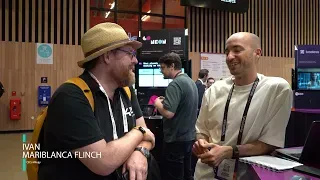
Opinions among those attending VivaTech differ, and that is precisely what makes the subject interesting. Ivan Mariblanca Flinch, CEO of Mikujy, raises the question without taking a definitive stance: “We’re talking about sovereignty today because there is a very significant geopolitical issue at stake. I wonder whether this notion of sovereignty will continue to be a buzzword that requires us to invest so much money [...] or whether our American partners are starting to calm down.”
Fabien Kunzler, Sharekey’s Swiss director, offers a more practical definition: “I think both [...] sovereignty is a bit like marketing – it’s a very, very broad concept. But [...] there’s now a clear definition of sovereignty [...] for me, the definition really is: we control it and it belongs to us.”
What this means in practical terms for businesses.
Beyond the conceptual debate, digital sovereignty is becoming a very real operational criterion in companies’ technological choices. Olga Guerous, CEO of Innopearl, puts it clearly: “ A business needs to know where its data is stored, how it is accessed, and who can access it [...] we also need to know about the models and how they were trained.”
Frédéric Soulier, co-founder of Quantalogic, goes so far as to describe a tiered approach: “We have implemented a system of sovereignty levels [...] typically, payroll and HR systems will be restricted to the highest level of sovereignty.” This level of granularity clearly illustrates that sovereignty is a concrete parameter of data governance. Fabien Kunzler summarises the philosophy behind this approach: “The keys remain on your device [...] compared to all the big tech firms, where the key is often jointly owned, and the cloud gets hacked.”A nuance: it is better to speak of autonomy rather than total sovereignty.
Not everyone agrees on the term itself. Lennig Pedron, CEO of the Trust Valley Initiative, prefers a more measured approach: “This aspect of sovereignty, at least within the Trust Valley, is much more closely linked to strategic autonomy. We’re going to work on interdependencies [...] how, ultimately, we’re actually going to work with others. ” For her, the ambition of total sovereignty is partly a fantasy: “Today, it’s virtually impossible to achieve total sovereignty [...] there’s sometimes quite a marketing angle behind this notion of sovereignty.”The real shortfall: investment and skills.
A fundamental question remains, posed by Pascal Marmier, head of the Unlimitrust campus: is Swiss digital sovereignty a genuine strategic shift, or merely rhetoric? His answer is straightforward: “I think there is a genuine strategic shift [...] what we’re still lacking, however, is the basic investment [...] to ensure the entire value chain is represented.”Infrastructure, yes, but above all skills
Digital sovereignty isn’t just about infrastructure: it’s also about skills. Sovereign servers, ethical clouds and data governance systems require people capable of designing them, securing them and developing them further. This is the focus of 42 Switzerland: training the talent that will give concrete meaning to this strategic autonomy, rather than leaving it merely at the level of rhetoric.
This article accompanies the second video in a series of five dedicated to 42 Lausanne’s presence at VivaTech 2026. The next video will explore the unconventional backgrounds of 42 students and how AI is transforming the school’s teaching methods.
Want to make sure you don’t miss out on what’s coming next? Follow 42 Lausanne on LinkedIn, YouTube and directly on this website.
Video produced with the support of Infomaniak, the ethical and sovereign cloud.